


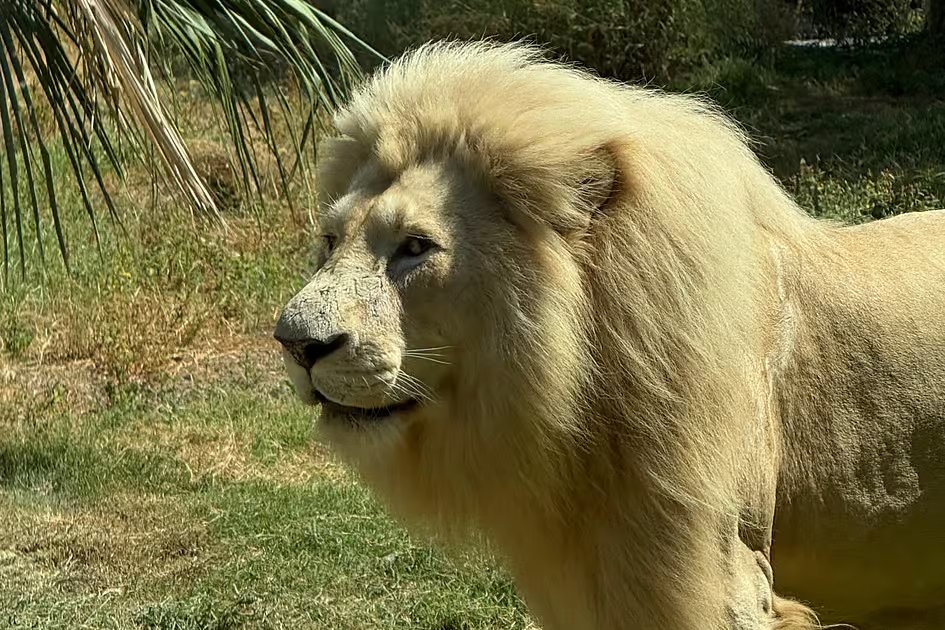
Yes, Dubai has no shortage of breakfast spots and luxury brunches, but few come with lions stretching, roaring, and beginning their morning routine just metres away from your table.
At Dubai Safari Park’s “Dine in the Wild” experience, guests are invited to swap city cafés for a wildlife setting where the soundtrack is made up of lion calls, birds, and rustling trees instead of traffic and coffee machines.
Set beside the park’s lion habitat, the experience combines breakfast with close-up encounters and guided tours across the park, giving visitors the chance to learn more about the animals and conservation efforts taking place behind the scenes.
During a special media session held as part of the experience, Khaleej Times was also given exclusive access to meet the veterinary and zoology teams responsible for caring for more than 3,000 animals at the park, along with a behind-the-scenes visit to see the white rhino calf, Salam.
Stay up to date with the latest news. Follow KT on WhatsApp Channels
But beyond the novelty of eating breakfast next to some of the world’s most powerful predators, the morning also offered a glimpse into the extensive work happening behind the scenes, from endangered species breeding programmes to advanced animal healthcare.
Speaking during the session, Dr. Murad Mustafa, Head of Veterinary Hospital, Dubai Safari Park, explained that every animal arriving at the park goes through strict quarantine and medical screening procedures before entering the habitats.
“We do have a quarantine facility where we are receiving the animals from internationally accredited zoos,” he said. “Depending on the species, animals stay there between 30 and 90 days while we conduct laboratory testing and make sure they are healthy and free from infection.”
The park’s veterinary system includes vets, nurses, laboratory teams, nutrition specialists, and keepers working together to monitor animal health daily.
One of the most surprising revelations for visitors was how the park tracks pregnancies among endangered species, including the recent birth of white rhino calf Salam.
Dr. Murad explained that veterinarians use hormone testing through blood and faecal samples to monitor pregnancies with over 90 per cent accuracy.
“The animal will not feel that you are taking a sample,” he said, referring to the collection of faecal samples from habitats before they are tested in the lab.
He also revealed that some big cats, including Bengal tigers, have been trained to voluntarily provide blood samples without anaesthesia, helping reduce stress on the animals.
“One of the studies we made three years ago was on Bengal tigers, where we collected blood from the tail without any harm,” he said. “We are trying to reduce the stress of anaesthesia on the bodies of animals.”
Even when anaesthesia is required, the park now uses rapid reversal techniques to shorten recovery times significantly.
“We give the anaesthesia, do the procedure in 10 or 20 minutes, then give reversal. The animal can wake up within two minutes,” he explained.
Miguel Santos, one of the park’s curators, said the public often only sees the visitor experience, while much of the work focuses on conservation planning and animal welfare.
“Our job is not only to maintain these populations and their welfare, but it’s also to coordinate with institutions for breeding,” he said.
The curator added that Dubai Safari Park’s recent accreditation by the Association of Zoos and Aquariums (AZA) places it among a small number of accredited zoos in the Middle East, following international standards in conservation and animal care.
The breakfast session also introduced visitors to Salam, the park’s newest white rhino calf born on March 1, who has become one of the season’s biggest attractions.
As summer approaches and the park prepares to close Season 7 on May 31, experiences like “Breakfast in the Wild” are giving residents one more reason to trade traditional brunch plans for a morning in the animal kingdom.
Source: Khaleej Times