


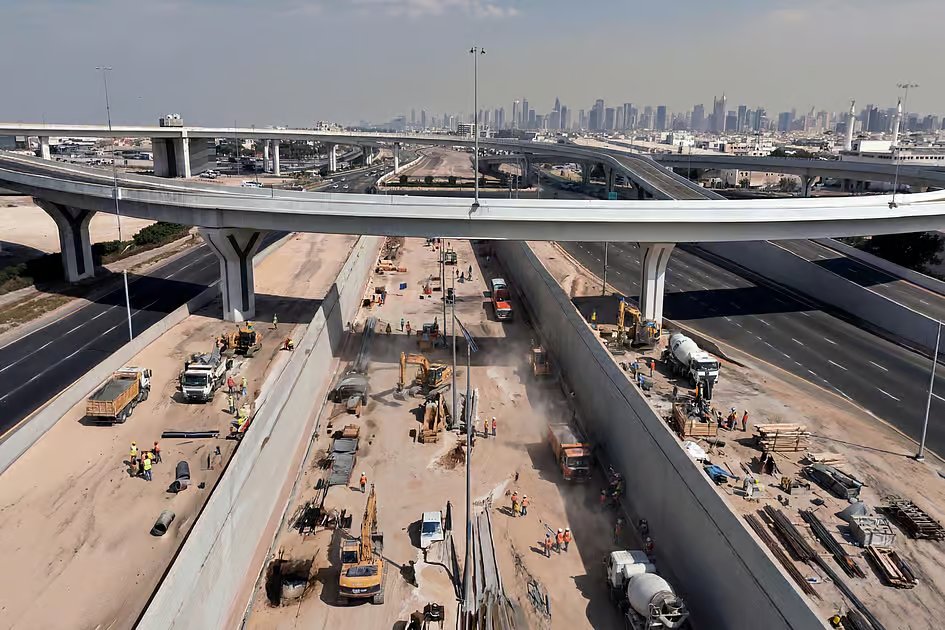
80 per cent of the Al Khaleej Street Tunnel Project has been completed by Dubai’s Roads and Transport Authority (RTA).
The tunnel extends 1,650 metres from the end of the Infinity Bridge ramp in Deira to the intersection of Al Khaleej Street and Al Wuheida Street. It features three lanes in each direction and has a capacity of up to 12,000 vehicles per hour in both directions.
Stay up to date with the latest news. Follow KT on WhatsApp channels.
The project is being delivered in line with leadership directives to keep pace with population growth and ongoing development along the corridor.
Major progress on corridor development
Highlighting the scale of the initiative, Mattar Al Tayer said the tunnel is part of one of RTA’s largest ongoing infrastructure projects.
“The construction of Al Khaleej Street Tunnel forms part of Al Shindagha Corridor Improvement Project, one of the largest projects currently being undertaken by RTA. The corridor extends 13 km along Sheikh Rashid Street, Al Mina Street, Al Khaleej Street and Cairo Street, and includes the development of 15 intersections. It serves several key residential communities and development projects, most notably Dubai Islands, Waterfront Market, Dubai Maritime City and Port Rashid. The project is estimated to serve one million people and reduce journey time from 104 minutes to 16 minutes by 2030.”
He further detailed the engineering scope and connectivity improvements being delivered under the project.
“The project includes the construction of a 1,650-metre tunnel with three lanes in each direction, providing free-flow traffic movement between Infinity Bridge and Deira, and vice-versa. It also includes converting roundabouts on Cairo Street and Al Wuheida Street into signalised intersections, carrying out improvements on Cairo Street, and connecting the ramp from Dubai Islands to the new tunnel on Al Khaleej Street towards Al Mamzar. The project serves Abu Hail, Al Wuheida and Al Mamzar, in addition to development projects including Dubai Islands, Waterfront Market and Al Hamriya Port.”
The construction of Al Khaleej Street Tunnel forms part of Al Shindagha Corridor Improvement Project, one of the largest projects currently being undertaken by #RTA. The corridor extends 13 km along Sheikh Rashid Street, Al Mina Street, Al Khaleej Street and Cairo Street, and⦠pic.twitter.com/5BAc4gdTO0
— RTA (@rta_dubai) May 17, 2026
Engineering milestones and round-the-clock work
On-ground progress has accelerated, with 14 teams working continuously on excavation support, including retaining walls and deep excavation systems. Four additional teams are excavating around the clock, achieving 5,000 to 6,000 cubic metres daily, with output expected to rise further.
So far, 890 metres of structural works have been completed, representing 65 per cent of total tunnel construction, while work continues on the remaining 760-metre phase. Installation of cladding, lighting, drainage systems, and utility diversions is also underway.
The project has recorded nearly 8 million work hours without any lost-time injuries, supported by 1,591 engineers, technicians and workers and 221 pieces of machinery.
Art, design and urban identity
Beyond infrastructure, the tunnel is also being envisioned as a visual landmark under the Dubai Tunnels initiative. Emirati artist Maryam Hathboor has designed a concept inspired by banknote-style illustrations, reflecting Dubai’s skyline and economic identity.
The artwork will extend across the tunnel in mosaic form, chosen for durability and long-term sustainability. As vehicles move through, the design will gradually reveal key landmarks, including the Infinity Bridge, creating an evolving visual journey that blends mobility with art.
Expanding connectivity across Dubai Creek
RTA is also advancing work on a new bridge connecting Dubai Islands and Bur Dubai. The 1,425-metre structure will feature four lanes in each direction and handle around 16,000 vehicles per hour both ways.
Rising 18.5 metres above Dubai Creek, the bridge will include a 75-metre navigational channel for marine traffic, along with pedestrian and cycling tracks and lifts for accessibility. It will also be supported by 2,000 metres of connecting roads to integrate with the wider road network.
Together, these projects signal a continued transformation of Dubai’s transport landscape, with faster travel times, enhanced connectivity and a growing focus on design-led infrastructure.
Source: Khaleej Times