


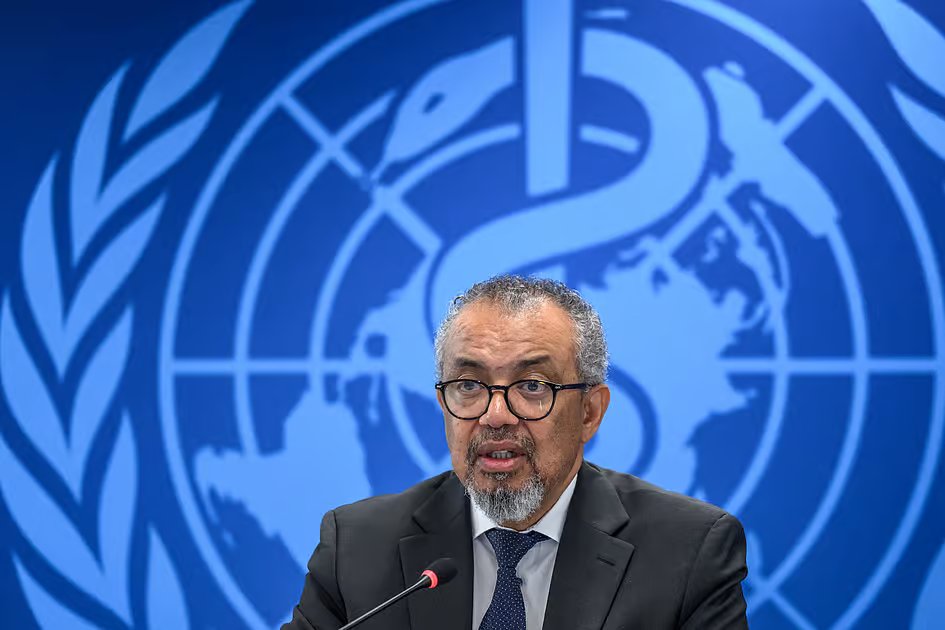
The World Health Organisation on Wednesday said the risk of the Democratic Republic of Congo’s deadly Ebola outbreak was currently high at the national and regional levels but low worldwide. The UN body added that there were 600 suspected cases of Ebola and 139 suspected deaths and numbers are expected to rise given the time the virus circulated before the outbreak in Congo and Uganda was detected.
A WHO Emergency Committee met on Tuesday in Geneva and confirmed the latest Ebola outbreak of the rare Bundibugyo strain of the virus was a public health emergency of international concern but not a pandemic emergency, Director-General Tedros Adhanom Ghebreyesus said.
“The WHO assess the risk of the epidemic as high at the national and regional levels and low at the global level,” Tedros said. He declared the emergency at the weekend, and he said it was the first time a WHO chief had taken that step without first consulting experts, due to the urgency of the situation.
Stay up to date with the latest news. Follow KT on WhatsApp Channels.
“Our absolute priority now is to identify all the existing chains of transmission … that will then enable us to really define the scale of the outbreak and be able to provide care,” Chikwe Ihekweazu, WHO emergencies chief, told the same press conference.
Super-spreader event detected
The outbreak has alarmed experts because it has been able to spread for weeks undetected across a densely populated area ravaged by widespread armed violence. A 2018-2020 outbreak of the Zaire strain of Ebola in the same region was the second deadliest on record, killing nearly 2,300 people.
The Bundibugyo strain of Ebola, which spreads through direct contact with bodily fluids from infected people or animals, has an average fatality rate of around 40%, according to the WHO.
Breaking down the figures in this outbreak, the WHO said 51 cases had been confirmed in Democratic Republic of Congo’s northern provinces of Ituri and North Kivu. Uganda has also informed the WHO of two confirmed cases in the capital, Kampala, including one death among two individuals who travelled from Congo to Uganda.
A US citizen who was working in Congo has also been confirmed positive and has been transferred to Germany, the WHO said.
WHO experts said that they suspected the outbreak likely started a couple of months ago, with the first suspected death reported on April 20, however investigations were ongoing.
WHO officials believe after the first death there was then a super-spreading event either at a funeral or a healthcare facility. On May 5, a super-spreader event was detected with a social media report of deaths in the communities, they said.
On May 12, the provisional government along with the WHO sent an investigation team where they collected samples. Eight out of the 13 samples were confirmed as Ebola.
Funding gaps
Tedros said difficulty detecting the rare strain through testing, in a challenging conflict-hit environment, added to the complexity of limiting the early onset of the outbreak. The early symptoms of the disease also resemble many other illnesses endemic in the region, such as malaria, he said.
Experts have suggested the delays in detecting the outbreak may also show gaps in preparedness following cutbacks by the U.S. and other major donors to global health funding.
Tedros said that it was too early to say whether funding cuts in Congo or to the WHO had contributed to any delays in detecting or responding to the outbreak.
There is currently no vaccine available for the Bundibugyo strain. WHO experts said that two possible vaccines are under consideration but could take between three and nine months to be developed and need clinical trials.
Source: Khaleej Times