


[Editor’s Note: Follow the Khaleej Times live blog for the latest regional developments with the US-Israel-Iran ceasefire now in effect.]
The UAE called for a stronger international action to ensure UN Security Council (UNSC) resolutions are fully implemented and enforced. The country also said that continued violations against civilians and civilian infrastructure threaten regional and global stability.
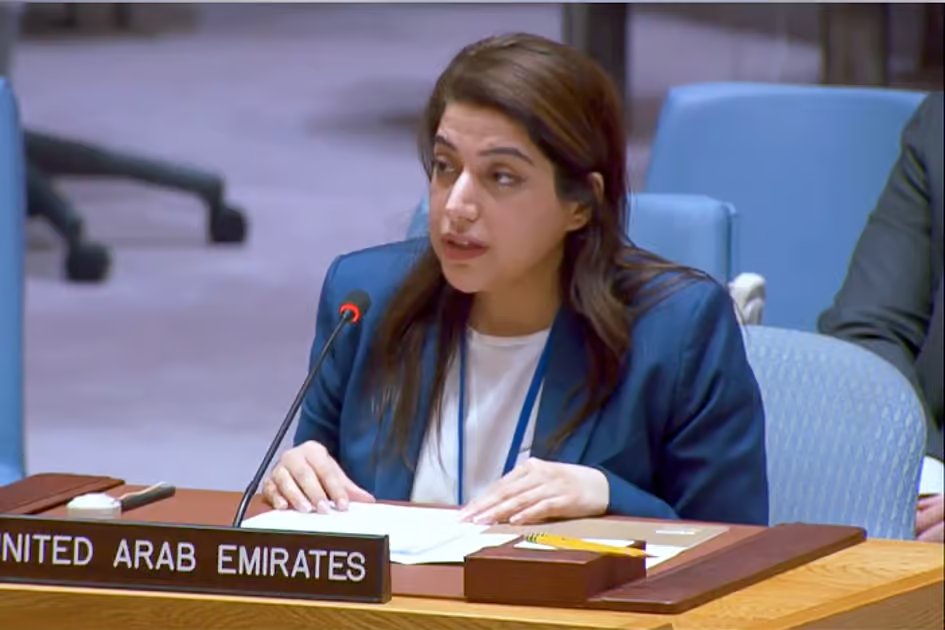
Speaking during the UN Security Council Open Debate on the Protection of Civilians, Deputy Permanent Representative of the UAE to the UN Ghasaq Shaheen stressed the urgent need to uphold international humanitarian law and safeguard civilian lives amid escalating tensions.
She highlighted concerns over Iran’s attacks and disruptions in the Strait of Hormuz, saying they pose serious risks to civilians, humanitarian access, international navigation, and global economic security.
Stay up to date with the latest news. Follow KT on WhatsApp Channels.
She noted that the Security Council had already adopted Resolution 2817 (2026), which called for an end to the attacks, protection of civilians, and respect for navigational rights and freedoms. However, she said that “these violations have continued, with Iran failing to comply with the resolution”.
“The UAE remains resilient and unwavering in its commitment to protecting its people, sovereignty, and national interests,” Shaheen said during the session. “But the question before the Council is: what action will it take to ensure the implementation of its resolutions and preserve its credibility?”
The remarks come days after the UAE announced it would address an emergency UN Security Council meeting after the “unprovoked terrorist attack targeting an electricity generator outside the inner perimeter of the Barakah Nuclear Power Plant” in the Al Dhafra region.
The UAE also urged the on the Security Council to condemn this “dangerous escalation in the strongest terms and to stress that targeting peaceful nuclear energy facilities constitutes a flagrant violation of international law and the UN Charter”.
Attack near Barakah plant
On May 17, UAE said a drone strike caused a fire at an electrical generator outside the inner perimeter of Abu Dhabi’s Barakah Nuclear Power Plant in the Al Dhafra region.
The ministry later confirmed that out of the three drones that were detected, two were intercepted, while the third struck the generator. Abu Dhabi Media Office confirmed that the blaze did not result in any injuries and had no impact on radiation safety levels at the facility.
On Sunday, the ministry added that it would undertake investigations to determine the source of the attacks.
IAEA confirms normal radiation levels
International Atomic Energy Agency said on Sunday that UAE informed the body that radiation levels remained normal after the drone strike, and that no injuries were reported. IAEA said on May 17 that emergency diesel generators were providing power to the plant’s unit 3.
IAEA was following the situation closely and was “in constant contact with the UAE authorities, ready to provide assistance if needed,” the UN watchdog said.
On May 18, IAEA cited the UAE as saying that off-site power was restored to Unit 3 of the Barakah plant earlier today. Rafael Grossi, the Director-General of the body, reiterated that “nuclear sites and other installations important for nuclear safety must never be targeted by military activity.”
Source: Khaleej Times