


Across Eastern Europe, the Middle East and Africa, digital transformation is well underway. Digital wallets, instant payments, national digital ID programs and mobile money have already put access within reach of millions of people and businesses, many of whom were outside the formal financial system not long ago.
The next phase of growth will depend on something less visible: whether those people and businesses feel confident enough to use what has been built. Trust is the infrastructure underneath all other digital infrastructure, and like most infrastructure, we tend to notice it only when it fails.
If cybercrime were a country, by some estimates it would be the third-largest economy in the world. Our Cyber Pulse report, which tracks threat activity across EEMEA, recorded a 13% increase in cyberattacks over the past year, with the Middle East accounting for nearly half (49%) of all activity across the region. The cost of a breach is rising too: the average data breach in the Middle East now costs $7.29 million, 64% higher than the global average.
Cost of doubt
Low trust works like a hidden tax on the digital economy. It shows up in abandoned checkouts, extra layers of verification, customers who quietly go back to cash and partnerships that take longer to close because neither side is sure of the other.
The impact is often greatest on those who are new to the digital economy. A newly banked mobile money user or a small merchant accepting digital payments for the first time has the least room to absorb a bad experience. One convincing scam can be enough to send them back to cash, and the chance to bring them into the digital economy may not come around again quickly.
Conversely, when people transact with confidence, every investment already made in payment rails, digital platforms and connectivity earns a greater return. But building confidence takes more than investment in cybersecurity alone.
Our report found that organisations across the region are increasing cybersecurity investment by around 10% a year, yet breach frequency and costs continue to climb.
Trust is earned under pressure
Confidence is won or lost in the hardest weeks, not the easy ones. During the regional tensions earlier this year, cyber threat activity across the GCC nearly tripled on the first day alone. Scammers moved just as quickly, launching fake travel refund links, evacuation-themed websites and government impersonation schemes designed to exploit people at their most anxious.
Over the same period, volumes rose sharply on Mastercard’s Stand-In Authorization, which can make decisions on transactions on a bank’s behalf when its own systems are unavailable. It kept payments moving at a time when issuer-side disruption could otherwise have escalated into outages. For people paying at the till, nothing appeared to change, and that is precisely the point.
This is why resilience belongs at the centre of every growth strategy. I define resilience as the ability to adapt to changing conditions and keep making progress without compromising your direction, your values or your vision. The businesses that can do that through disruption are the ones customers will return to once it passes.
And as commerce enters its agentic era, trust becomes ever more vital. AI is moving from recommending to acting on our behalf – booking, paying and negotiating – and questions of identity, intent, permission and accountability become central to every transaction. Security has to be part of the design from day one.
Built in, and built together
No single company can build trust alone, because no single company captures all of its value. Trust behaves like a public good: every bank, telco, merchant, platform and government benefits when people participate with confidence, which is also why it risks being underinvested. The region’s well-documented shortage of cybersecurity talent is one example, and the need to share threat intelligence fast enough to stay ahead of attackers is another. Both require governments, regulators and industry to treat trust as shared infrastructure and invest in it together.
In my years working across this region, the most successful ventures I have seen were built on partnerships, with banks, telcos, governments and technology platforms working toward the same outcome. Building trust will be no different.
Every day, our network moves value in dollars, euros, dirhams and dozens of other currencies. But the most important currency in the digital economy is none of those. It is trust. The businesses and economies that treat it as a strategic priority, and invest in it with the same seriousness as any other infrastructure, will be the ones best placed to grow.
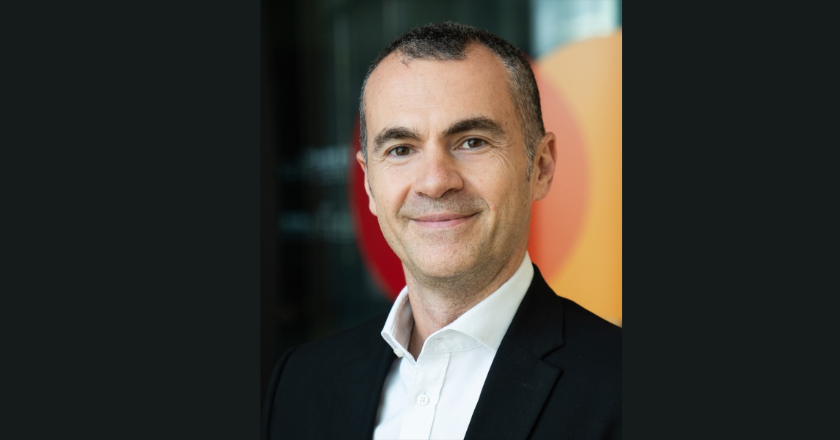
This opinion piece is authored by Mete Güney, executive vice president, market development, EEMEA, Mastercard.
Source: Tahawul Tech