


There was a time when Diwali gifting meant a traditional box of kaju katli from the neighbourhood sweet shop. It was delicious, it was familiar, and it was forgotten by the next week. Not anymore!
This festive season in Dubai, your mithai (sweets) is getting the same treatment as your luxury handbag. Bespoke packaging, single-origin ingredients, chef-driven innovation, and a story worth telling. Welcome to the era of luxe mithai.
Luxury heritage
For Bateel, the brand that quite literally made the date gourmet, luxury was never something to be added. It was there from the beginning. “Bateel’s story is one of authenticity, quality and innovation. We elevated the date to gourmet status by pairing our handpicked organic dates with the finest ingredients, we created offerings that resonated across cultures. We pioneered the world’s first date chocolate by combining our organic dates with single-origin chocolate,” the brand shares.
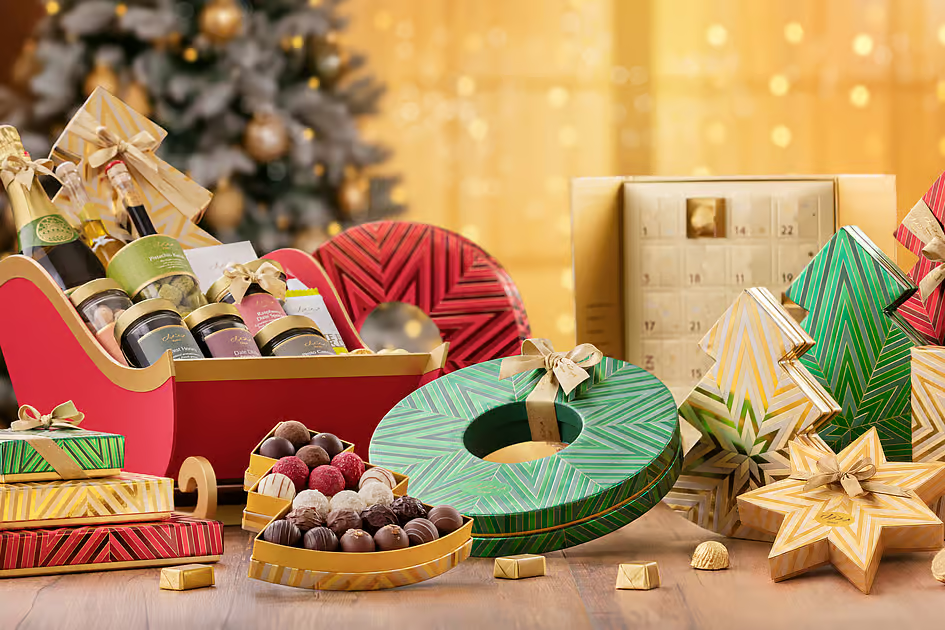
This Diwali, that philosophy continues. While Bateel is not launching a new chocolate range specifically for the festival, its festive packaging, including a new star-shaped box, is designed for the season of light. Bateel expects its Golden Date Latte, paired with a new Mince Pie, to be the bestseller this season.
The brand’s recent innovations prove that desserts are a global language. “Whether it is our Sea Salt Caramel truffle or Qahwa-infused ganache, each creation reflects our dedication to quality. More recently, inspired by the success of Dubai Chocolate, we introduced our
own signature version. Highlights include our Kunafa Truffle Collection and our Dubai Date Chocolate Collection, a harmonious fusion of tradition and modernity.”
The chef’s table
If Bateel gave the date its designer status, chefs are doing the same for the laddoo.
At Avatara, Dubai’s Michelin-starred Indian vegetarian restaurant, Chef Omkar Walve is on a mission to give mithai the same reverence as French pâtisserie.
“My approach to reimagining mithai begins with preserving the emotion behind it. These sweets carry memories of childhood, family and celebrations,” he says. Chef Omkar is emphatic that Indian mithai doesn’t need to borrow luxury… it already is luxury. “Indian mithai deserves the same luxury status as French pâtisserie because it demands exceptional craftsmanship and precision. From patiently reducing milk to balancing sugar, spices, nuts and delicate aroma, there is an extraordinary understanding of flavour involved. Every region brings its own techniques and stories, passed down through generations.”
That sentiment is echoed at Trèsind, where executive chef Mohammed Zeeshan sees mithai not as a trend to be elevated, but a tradition to
be respected.
“When we started reimagining mithai at a fine-dining level, the idea was not to make an Indian sweet look French. It was to take something deeply familiar and present it in a way that could surprise the guest. Whether it is a Black Forest-inspired mithai tart or Daulat Ki Chaat finished with gold, the soul remains Indian, but the technique and presentation evolve.”
How gifting has changed
This shift in perception is most visible in how
we gift. Dubai’s luxury shoppers today don’t just want sweetness. They want something more personal yet edible.
“I see a growing opportunity for mithai to become a prestige gift in Dubai, alongside fine chocolates and French pâtisserie. This is a city that appreciates craftsmanship, thoughtful presentation and a sense of occasion,” notes Chef Omkar. “Carefully chosen ingredients, refined textures and elegant packaging can make it a compelling luxury gift.”
Patchi, the Lebanese luxury chocolate house that has become synonymous with Diwali gifting in the UAE, is witnessing this first-hand.
“Diwali is an important gifting occasion for Patchi in the UAE, reflecting Dubai’s multicultural community and its appreciation for meaningful celebrations,” the brand shares. “Our focus is on creating an elevated festive gifting experience that combines Patchi’s chocolate craftsmanship with the richness and vibrancy of Diwali traditions.”
For them, the future of festive luxury is personal. Beyond curated boxes, they are leaning into in-boutique experiences like personalised calligraphy and interactive chocolate activities.
This is where the laddoos and the barfis find their edge. In a market saturated with imported truffles, a box of mithai that tells a story of saffron from Kashmir, pistachios from Persia, or a grandmother’s recipe perfected with modern technique that feels far more personal.
As Patchi notes, “Traditional Indian sweets offer wonderful inspiration for future chocolate innovation. Classics such as laddoos, barfis, and other mithai varieties present opportunities to explore new textures, ingredients, and flavour combinations within premium chocolate creations.” Think cardamom ganache, saffron almond praline, or a barfi-inspired truffle… Indian soul, luxury craft.
More than competition
So, is it laddoo versus macaron? The chefs say no. It’s not a takeover; it’s a homecoming.
“I would say this is less about competition and more about the world becoming curious about cultures beyond its own. Indian cuisine, ingredients, and craftsmanship are receiving greater international recognition, and mithai is naturally becoming part of that conversation,” says Chef Zeeshan of Trèsind. “A laddoo or a piece of barfi might look simple, but behind it there can be generations of knowledge, technique, and tradition.”
This Diwali, whether it’s Bateel’s star-shaped box of date truffles, Avatara’s reimagined soulful sweet, Tresind’s gold-dusted Daulat Ki Chaat, or Patchi’s calligraphy-personalised festive hampers, the message is the same.
Mithai was never just sugar and ghee. It was always gold. We’re finally boxing it like it is.
Source: Khaleej Times