


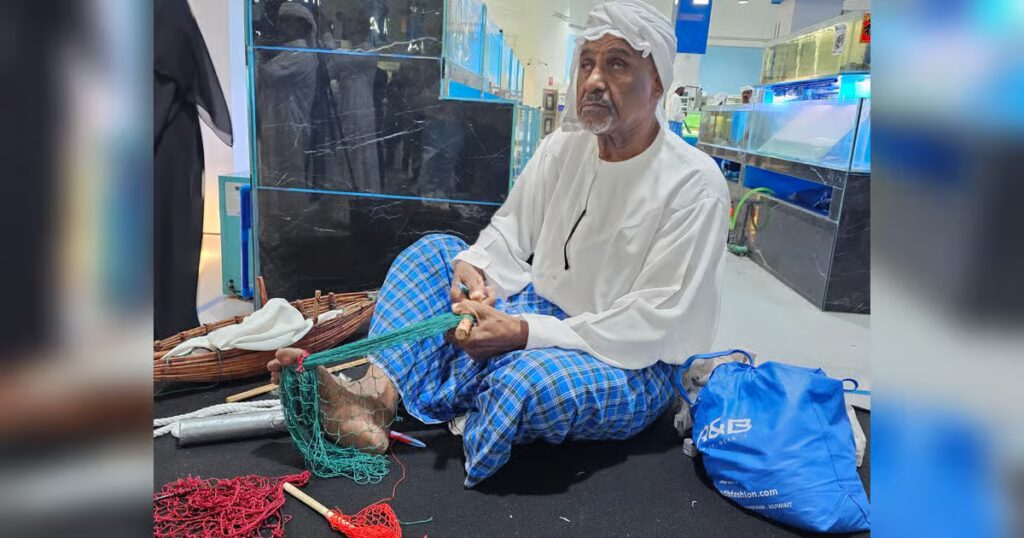
For nearly six hours, a fishing veteran and others on board a boat battled strong winds and rough seas as a powerful storm struck their vessel during a journey from Oman to Dubai in the early 2000s. Water began entering the boat and those on board were exhausted, unsure when conditions would improve.
For 77-year-old Mohammed Saeed Al Zaabi, the incident remains one of the most frightening memories from his more than 45 years at sea.
“I was travelling from Salalah in Oman to Dubai when a strong storm hit us. The winds were very powerful, and the boat was badly affected,” he recalled.
Stay up to date with the latest news. Follow KT on WhatsApp Channels.
“Water entered the boat, and everyone was tired. We struggled for almost six hours. But thank God, the storm eventually became weaker, and we survived.”
Al Zaabi spoke to Khaleej Times on Wednesday during the inaugural opening ceremony of Dubai’s 2026–2027 fishing season at Waterfront Market.
The event brought together members of the fishing community and industry representatives to mark the beginning of the season and highlight Dubai’s fishing traditions.
Originally from Oman, Al Zaabi has spent decades fishing in the waters around the UAE and Oman. Although he no longer fishes professionally, his love for the sea has not faded. Even at this age, he continues to go fishing as a hobby.
“I have been fishing for more than 45 years. I have caught all kinds of fish in the Arabian Gulf, Gulf of Oman and Arabian Sea,” he said.
From days at sea to returning home by evening
Having witnessed decades of changes in the fishing industry, Al Zaabi remembers a time when going out to sea meant spending several days away from home.
In those days, fishermen depended on traditional sailing boats, which required considerable effort to operate. Travelling to fishing grounds and returning with the catch could take days, depending on the weather and sea conditions.
“Earlier, the boats were very difficult to operate. Sometimes, we would go fishing for days before returning. But when motorised boats came, everything became easier,” he said.
“Now, we can leave in the morning, catch fish and return home by the evening.”
For fishermen like Al Zaabi, the introduction of motorised boats changed not only how they travelled but also how much time they needed to spend at sea.
Despite these changes, he has continued to practise the skills he learnt during his earlier years.
Keeping old fishing traditions alive
At the Waterfront Market event, Al Zaabi was surrounded by traditional fishing equipment, much of which he had made himself.
Among the items he demonstrated were fishing nets, traps, ropes and equipment once used by divers and sailors.
“Everything you see here, I have been making it myself for the last 45 years. I make all these things with my own hands,” he said, pointing towards the equipment.
One of the items was a gargoor, a traditional fish trap designed to allow fish to enter through an opening while making it difficult for them to escape.
He also demonstrated equipment used by divers, including weights that helped them descend underwater and ropes connected to their boats.
Making these tools requires patience. “A large traditional fishing net can take about six months to complete and can last five to six years,” said Al Zaabi.
He also explained how fishermen once relied on sails to reach their fishing grounds.
“When the sail was raised, the boat would move through the sea. Once the fishermen reached their fishing area, they would lower the sail and throw their nets into the water. After fishing, they would raise the sail again and return,” he said.
Although modern boats have made fishing easier, Al Zaabi continues to make traditional equipment and share his knowledge of how fishermen worked in the past.
And while fishing is no longer his profession, the sea remains part of his life. After more than four decades, he still heads out onto the water, not for a living, but because he enjoys fishing.
Source: Khaleej Times