


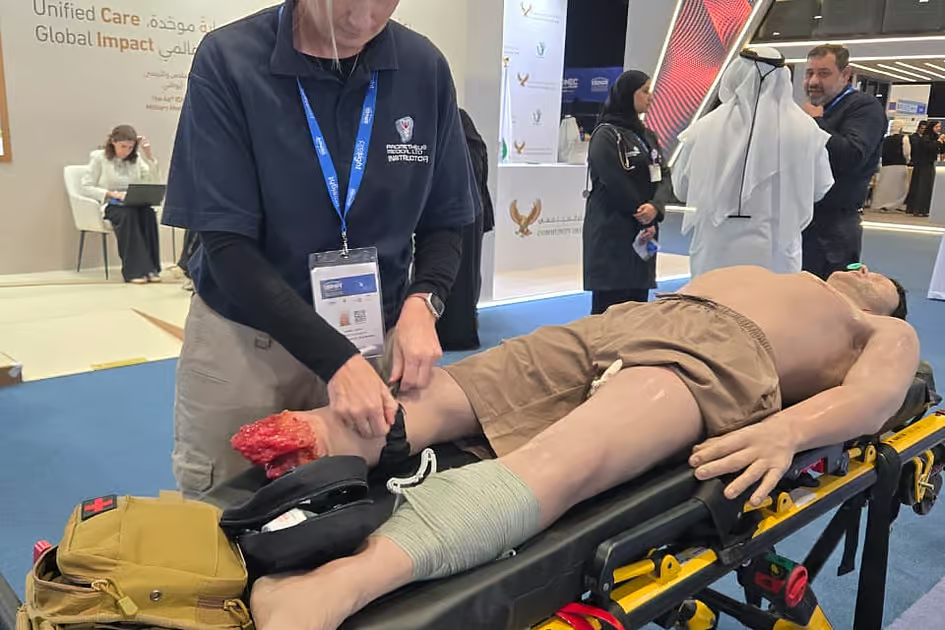
A hyper-realistic training mannequin lay motionless on a stretcher at an Abu Dhabi security exhibition this week as trainers demonstrated how quickly a person can die from severe blood loss, and how ordinary civilians could save them.
“Let’s pretend this guy stood on an explosive device,” Carmel Speight, a Prometheus Medical International paramedic instructed during a live trauma-response demonstration attended by Khaleej Times at the International Exhibition for National Security and Resilience 2026.
Within seconds, synthetic blood began pumping from the mannequin’s leg wound as participants were taught how to apply a tourniquet. “This guy could die within minutes,” she said. “Our priority is to stop the bleeding and save lives.”
Stay up to date with the latest news. Follow KT on WhatsApp Channels.
The exercise forms part of a growing push by UAE emergency response specialists to train non-medical workers, including hotel staff, hospitality employees and corporate teams, in advanced first-response skills once more commonly associated with military or battlefield medicine.
According to Prometheus Medical International, demand for such training has increased amid growing awareness of global security threats, mass casualty incidents and emergency preparedness.
“There is a risk landscape today that is different from what existed a year ago,” said Steven Wines, CEO of the company.
“We live in a very safe country, but if something serious happens, the first few minutes before emergency services arrive can determine whether somebody lives or dies.”
The company has recently conducted trauma-response sessions for hospitality workers and organisations across the UAE, teaching techniques including catastrophic bleeding control, wound packing, airway management and CPR.
During the demonstration, trainees were taught how to tighten a tourniquet until bleeding stops completely — even if it causes severe pain.
“This would be very painful,” the paramedic explained while tightening the device around the mannequin’s leg. “But we don’t stop because our priority is to save the patient.”
Participants were also shown how improvised materials such as belts, scarves or head coverings could be used in emergencies if commercial medical equipment is unavailable.
“A belt or even a headscarf could save somebody’s life,” Speight said.
In another scenario, staff demonstrated how unconscious casualties can suffocate if their airway becomes blocked, and how simple positioning techniques could help keep them alive until paramedics arrive.
“There are really basic interventions members of the public can do very easily,” Wines said. “The more people who have those skills and the confidence to use them, the more resilient society becomes.”
The company said the training is currently being offered free of charge to organisations as part of a wider effort to improve emergency preparedness and public resilience in the UAE.
While most sessions are currently organised through employers and institutions, individuals can also access parts of the programme through interactive e-learning modules designed to teach core life-saving techniques.
“There’s no substitute for hands-on training, but we’re trying to make the learning as accessible as possible,” Wines said.
Employees interested in practical workshops are also encouraged to approach their companies or HR departments to arrange on-site training sessions for teams and staff.
The company said it uses a combination of hands-on simulation training, hyper-realistic medical mannequins and digital learning tools to train participants.
Wines said the programme was also enabled by the UAE’s Good Samaritan protections, which encourage bystanders to assist in emergencies. “The philosophy is about knowledge transfer,” he said. “Not keeping the knowledge to ourselves but cascading it out into the community.”
The demonstrations were showcased during ISNR 2026 in Abu Dhabi.
Source: Khaleej Times