


The UAE’s health and emergency authorities have confirmed the country’s readiness to respond to any emerging health developments, including the Hantavirus.
The UAE’s National Emergency Crisis and Disaster Management Authority (NCEMA) and the Ministry of Health and Prevention (MoHAP) made an important announcement, stating that authorities are “monitoring continuously and that all measures are focused on protecting the community and maintaining the highest readiness”.
The authorities noted that the country’s health preparedness and monitoring procedures are continuously reviewed and updated in line with international best practices and approved standards to ensure the highest levels of public safety and health security.
Stay up to date with the latest news. Follow KT on WhatsApp Channels
The statement comes amid growing international attention on the Hantavirus, a rare viral disease primarily transmitted to humans through contact with infected rodents or their droppings. Health officials reiterated that the UAE maintains an integrated system for monitoring and remains fully prepared to deal with potential health threats.
Authorities urged the public to rely on official sources for information and avoid circulating rumours or unverified reports related to public health issues.
What is hantavirus?
The World Health Organization has classified Hantavirus as a low-risk pathogen in terms of global epidemic spread, citing the limited potential for human-to-human transmission and the fact that most reported infections are associated with direct contact with rodents or environments contaminated by their waste. The WHO further noted that the current public health situation does not indicate any level of risk warranting concern about a potential pandemic.
Confirmed hantavirus cases
Three people, a Dutch couple and a German national, have died since the start of the outbreak of the virus, which is usually spread by wild rodents but can be transmitted person-to-person in rare cases of close contact.
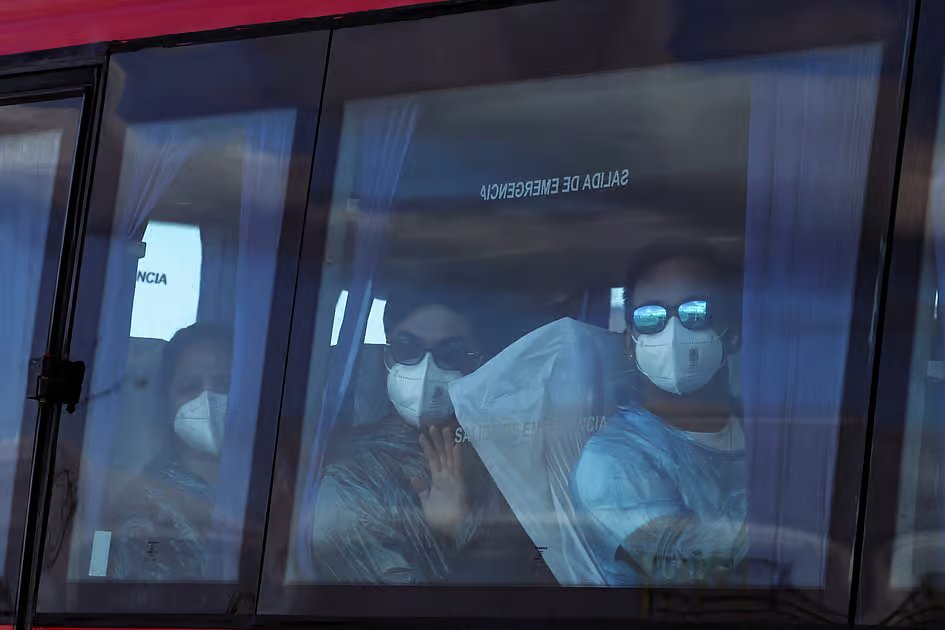
International medical officials are working to contain the outbreak, which hit the Hondius luxury cruise ship.
The WHO has confirmed nine cases and urged isolation of suspected cases, adding that more are expected given passenger interactions before the virus was detected. It said more cases could come because of the long incubation period, but that this was not a pandemic, and was nothing like Covid-19.
The virus can be deadly, although it does not spread easily from person to person.
No indication of hantavirus outbreak
The head of the World Health Organization said on Tuesday there was no indication of the onset of a broader hantavirus outbreak, although he did not rule out further cases.
At the moment, there is no sign that we are seeing the start of a larger outbreak, but of course the situation could change and, given the long incubation period of the virus, it’s possible we might see more cases in the coming weeks
Who Director-General Tedros Adhanom Ghebreyesus
How did the hantavirus spread?
Health officials say that because the virus does not spread easily between people, there is little risk to the general public, urging calm among the public.
The MV Hondius had been carrying 147 passengers and crew from 23 countries when a cluster of severe respiratory illnesses among passengers was first reported to the WHO on May 2.
By then, 34 other passengers had disembarked on islands in the Atlantic before the cruise ship headed north to Cape Verde, where news of the outbreak emerged.
It was first detected by health officials in Johannesburg on May 2 treating a British man who had disembarked the ship. That was some three weeks after the first passenger, a Dutchman, had died.
The luxury cruise ship left for the Canary Islands on May 6 after Madrid accepted a WHO request to manage its evacuation.
The WHO has recommended a 42-day quarantine for all passengers, Tedros told reporters.
“People should also put their minds at rest that the situation is under control,” Gianfranco Spiteri, emergencies lead at the European Centre for Disease Prevention and Control, told Reuters.
“We know the virus. We can prevent further onward transmission. We’re not expecting a new pandemic from this,” he said.
Inputs from Reuters
Source: Khaleej Times